Eric Weiser | Applied AI
Applied artificial intelligence systems across web applications, predictive modeling, psychology-driven systems, and AI-generated media built by Eric Weiser.
Applied artificial intelligence systems across web applications, predictive modeling, psychology-driven systems, and AI-generated media built by Eric Weiser.
Projects
Projects
Projects
AI Web Apps
AI Web Apps
Daybreak AI: Your Daily AI News Source
Daybreak AI: Your Daily AI News Source
Daybreak AI: Your Daily AI News Source
Daybreak AI is an AI news aggregation site I built with Claude Code that pulls and updates daily headlines about AI-related news stories (and links to the stories) from major news sources including BBC, CBS News, Fox News, NPR, TechCrunch, Wired, MIT Technology Review, and more. Updated every morning. Just click enter below to check it out. Daybreak AI: Wake up to AI!
Daybreak AI is an AI news aggregation site I built with Claude Code that pulls and updates daily headlines about AI-related news stories (and links to the stories) from major news sources including BBC, CBS News, Fox News, NPR, TechCrunch, Wired, MIT Technology Review, and more. Updated every morning. Just click enter below to check it out. Daybreak AI: Wake up to AI!

AI Content Pipeline: Multi-Agent Research and Writing System
AI Content Pipeline: Multi-Agent Research and Writing System
AI Content Pipeline: Multi-Agent Research and Writing System
A fully deployed agentic AI system built in Python in which three autonomous AI agents collaborate in sequence without human intervention: (1) a Researcher agent searches the live web for current information, (2) a Writer agent drafts a structured article from those findings, and (3) an Editor agent refines and polishes the final output. The system demonstrates core agentic AI principles including tool use, multi-agent orchestration, and autonomous task completion. Built with the OpenAI API, DuckDuckGo search, and Streamlit.
A fully deployed agentic AI system built in Python in which three autonomous AI agents collaborate in sequence without human intervention: (1) a Researcher agent searches the live web for current information, (2) a Writer agent drafts a structured article from those findings, and (3) an Editor agent refines and polishes the final output. The system demonstrates core agentic AI principles including tool use, multi-agent orchestration, and autonomous task completion. Built with the OpenAI API, DuckDuckGo search, and Streamlit.

AI-Generated Landing Page Prototype (Omma)
AI-Generated Landing Page Prototype (Omma)
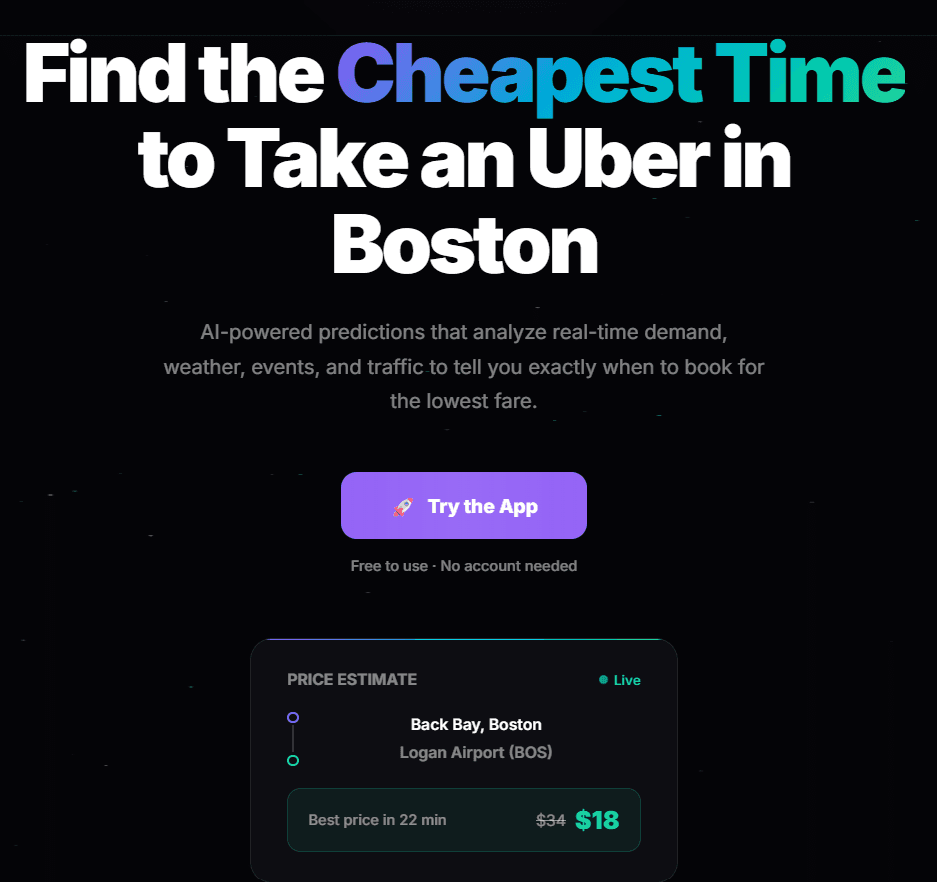
Here, I used Omma to generate a polished 3D landing page concept for an AI Uber pricing tool I created, then paired it with a real working app to demonstrate both design and execution.
Here, I used Omma to generate a polished 3D landing page concept for an AI Uber pricing tool I created, then paired it with a real working app to demonstrate both design and execution.
Claude Code AI News Dashboard Demo
Claude Code AI News Dashboard Demo
A custom AI news dashboard prototype built with Claude Code that transforms trending AI stories into ready-to-use YouTube, LinkedIn, Twitter/X, and newsletter content ideas. Designed as a clean, presentation-ready workflow for creators, marketers, and AI enthusiasts exploring real-time content generation.
A custom AI news dashboard prototype built with Claude Code that transforms trending AI stories into ready-to-use YouTube, LinkedIn, Twitter/X, and newsletter content ideas. Designed as a clean, presentation-ready workflow for creators, markets, and AI enthusiasts exploring real-time content generation.
LYoutube Idea Scorecard
(Built with Google Gemini App Builder)
LYoutube Idea Scorecard
(Built with Google Gemini App Builder)
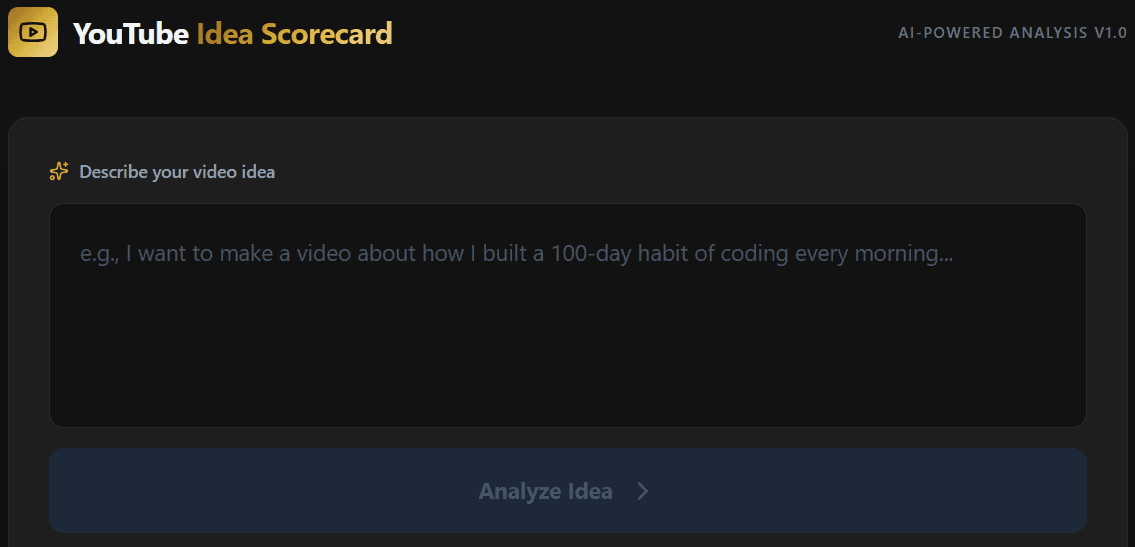
An AI-powered web app that evaluates YouTube video ideas and provides engagement scoring, audience targeting, hook optimization, and thumbnail concepts. Built and deployed in under an hour using Google’s new Gemini App Builder.
An AI-powered web app that evaluates YouTube video ideas and provides engagement scoring, audience targeting, hook optimization, and thumbnail concepts. Built and deployed in under an hour using Google’s new Gemini App Builder.
LLinkedIn Ghostwriter Agent
LLinkedIn Ghostwriter Agent
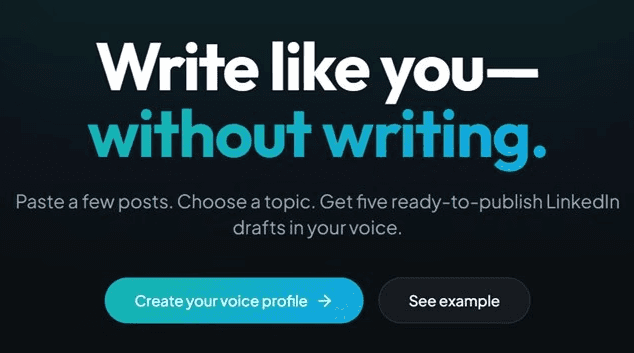
AI agent that learns your LinkedIn voice and generates authentic, ready-to-post content.
AI agent that learns your LinkedIn voice and generates authentic, ready-to-post content.

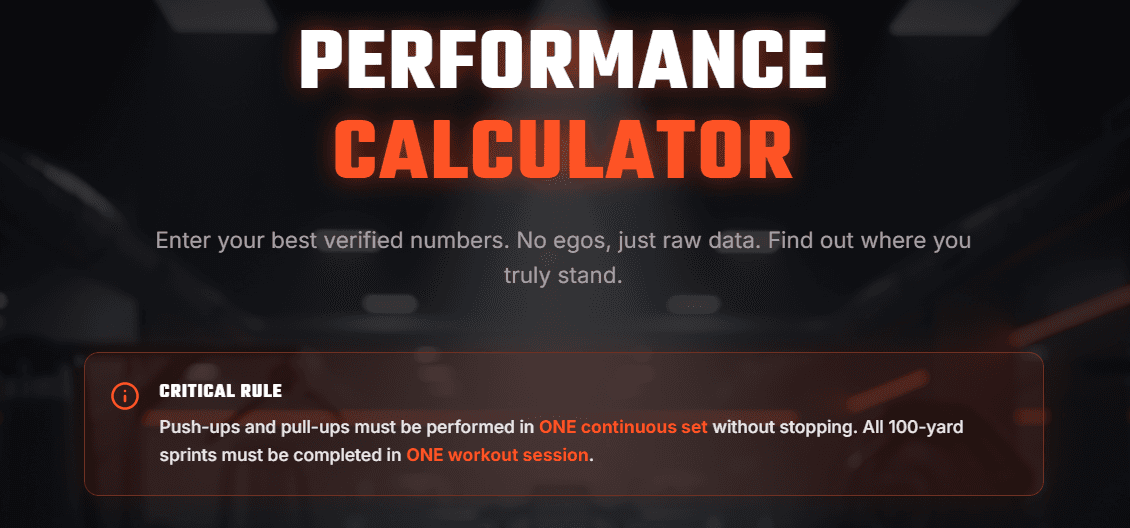
LAI-Built Fitness Performance Calculator
LAI-Built Fitness Performance Calculator
I built this interactive fitness calculator with the assistance of Agent-4 in Replit, an AI coding agent capable of generating and refining complete applications. The tool estimates performance benchmarks from user inputs and demonstrates how agent-driven development can accelerate the creation and deployment of modern web apps built with TypeScript and Vite.
I built this interactive fitness calculator with the assistance of Agent-4 in Replit, an AI coding agent capable of generating and refining complete applications. The tool estimates performance benchmarks from user inputs and demonstrates how agent-driven development can accelerate the creation and deployment of modern web apps built with TypeScript and Vite.
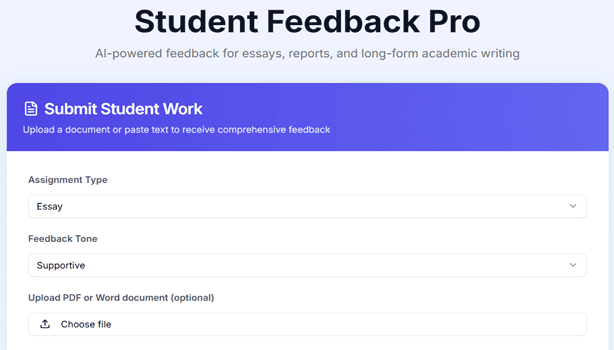
Student Feedback Pro
Student Feedback Pro
An AI-powered grading tool that generates structured, high-quality feedback on
college level student papers, helping instructors save time without sacrificing rigor.
An AI-powered grading tool that generates structured, high-quality feedback on
college level student papers, helping instructors save time without sacrificing rigor.
An AI-powered grading tool that generates structured, high-quality feedback on college level student papers, helping instructors save time without sacrificing rigor.
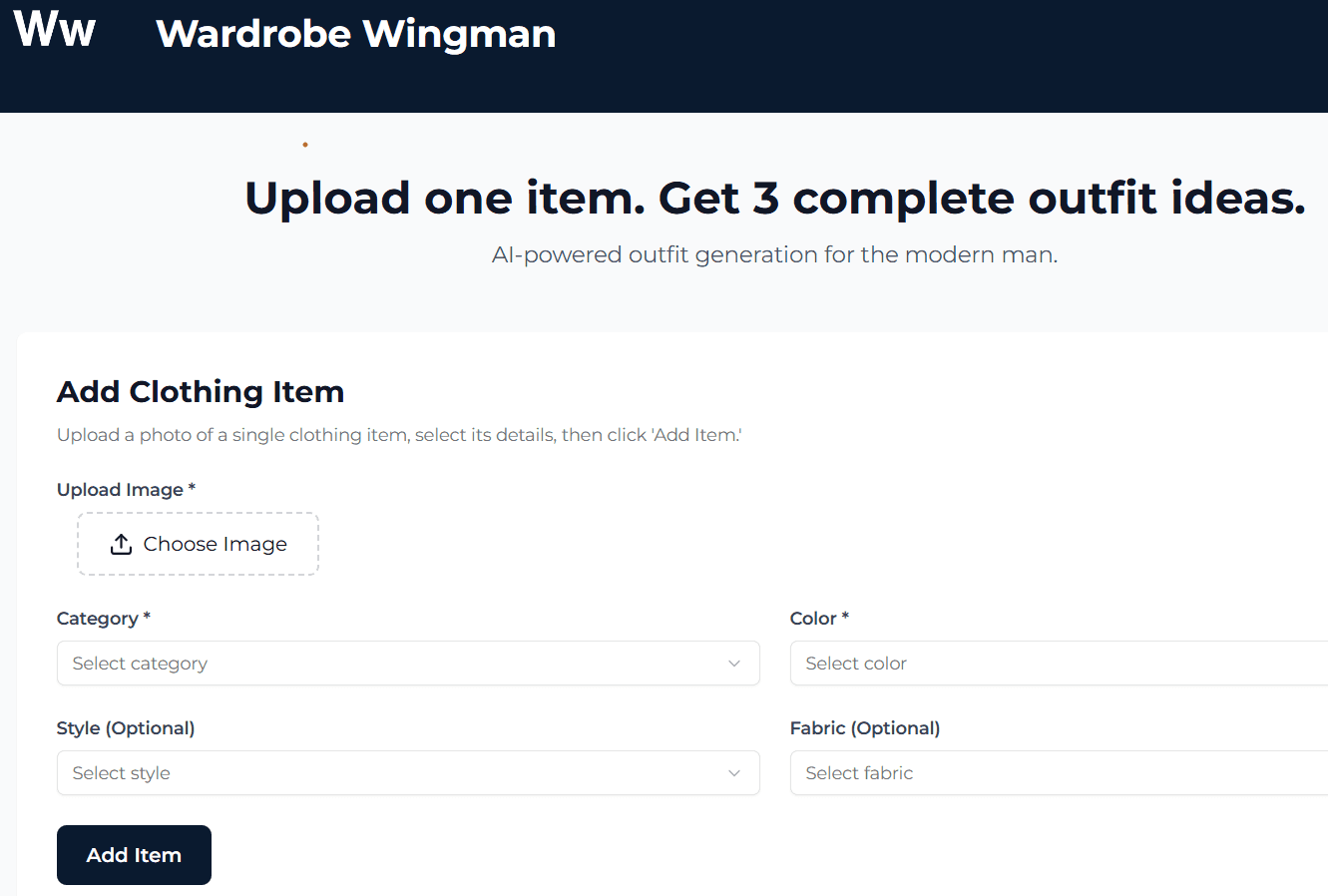
Wardrobe Wingman
Wardrobe Wingman
An AI-powered outfit recommendation tool that turns one clothing item into three complete, well-coordinated ideas for the modern man.
An AI-powered outfit recommendation tool that turns one clothing item into three complete, well-coordinated ideas for the modern man.
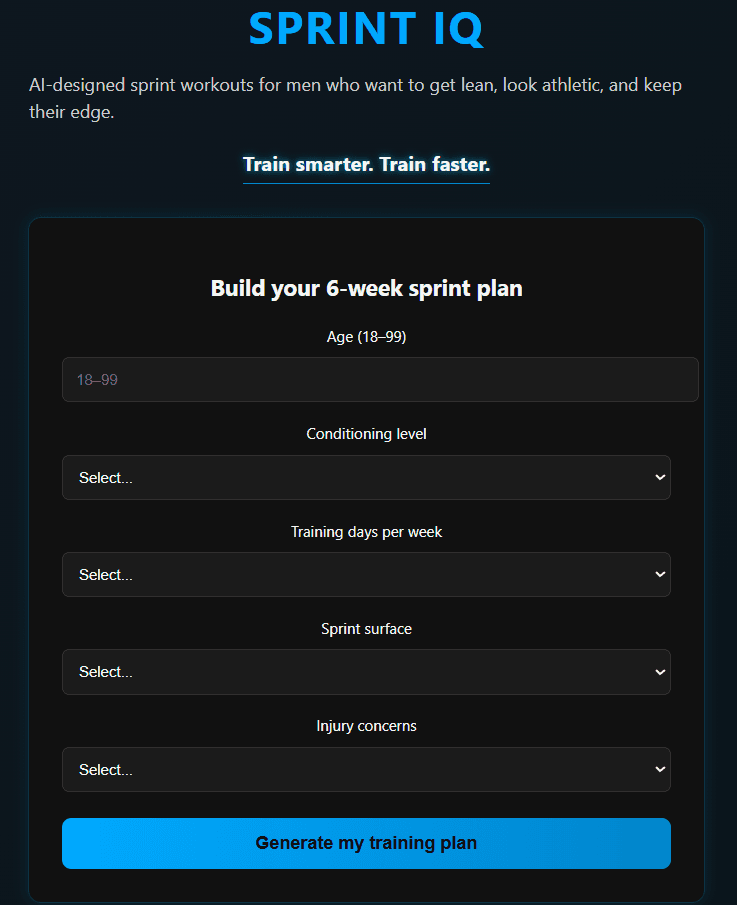
Sprint IQ
Sprint IQ
An AI-driven sprint training tool developed using OpenAI Codex that generates
personalized 6-week sprint programs based on age, conditioning level, training
frequency, surface, and injury considerations.
An AI-driven sprint training tool developed using OpenAI Codex that generates
personalized 6-week sprint programs based on age, conditioning level, training
frequency, surface, and injury considerations.
An AI-driven sprint training tool developed using OpenAI Codex that generates personalized 6-week spring programs based on age, conditioning level, training frequency, surface, and injury considerations.
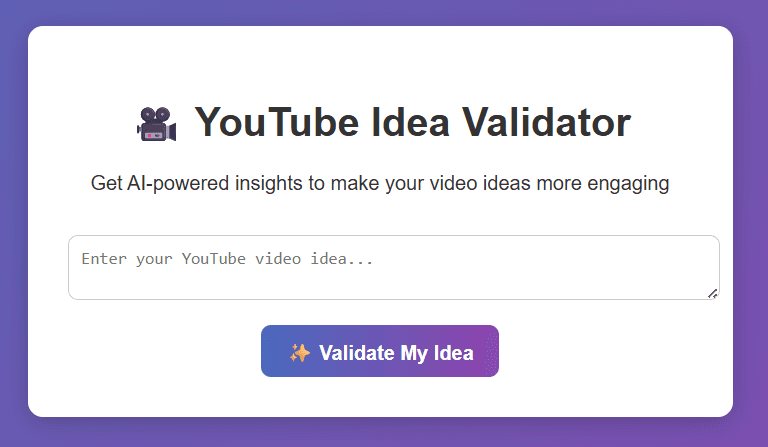
YouTube Idea Validator
YouTube Idea Validator
An AI-driven YouTube idea testing tool that analyzes engagement potential and audience appeal, offering fast feedback to strengthen video concepts before production.
An AI-driven YouTube idea testing tool that analyzes engagement potential and audience appeal, offering fast feedback to strengthen video concepts before production.
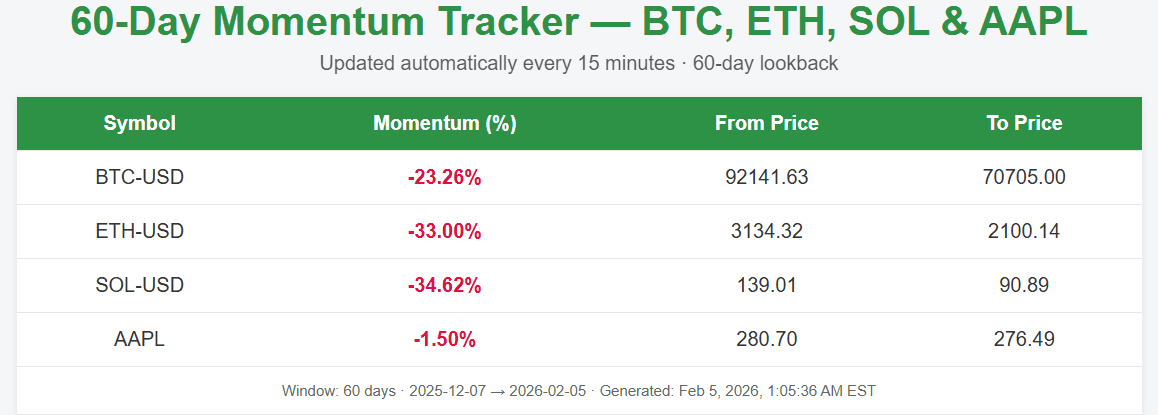
BTC, ETH, SOL, and AAPL 60-Day Momentum Tracker
BTC, ETH, SOL, and AAPL 60-Day Momentum Tracker
An AI-driven momentum tracking dashboard for Bitcoin (BTC), Ethereum (ETH), Solana (SOL), and Apple (AAPL) that analyzes rolling 60-day price changes to compare trend strength and drawdowns across major cryptocurrencies and a large-cap equity.
An AI-driven momentum tracking dashboard for Bitcoin (BTC), Ethereum (ETH), Solana (SOL), and Apple (AAPL) that analyzes rolling 60-day price changes to compare trend strength and drawdowns across major cryptocurrencies and a large-cap equity.
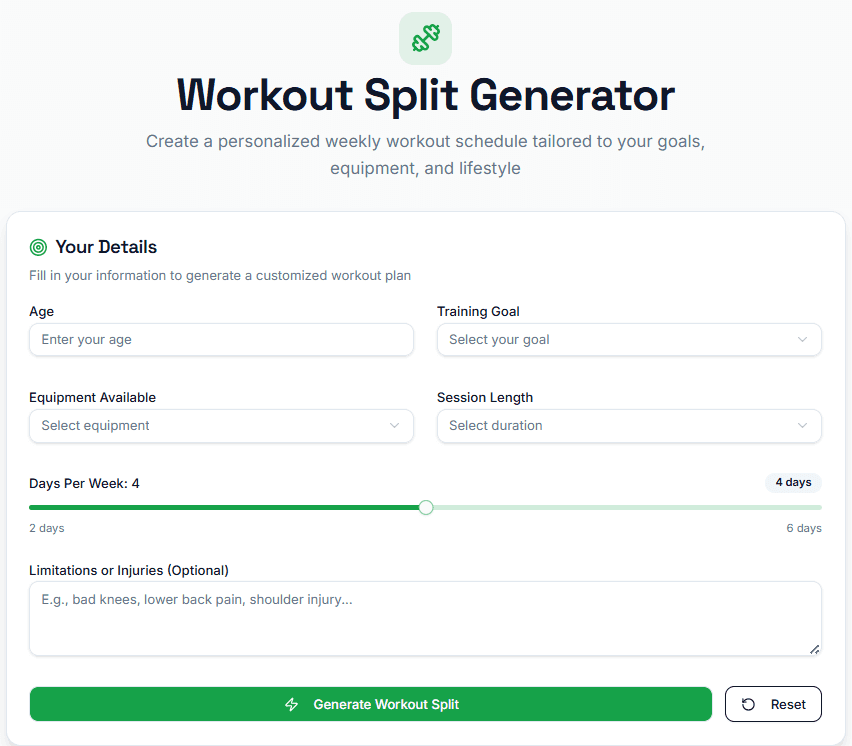
Workout Split Generator
Workout Split Generator
An AI-assisted workout planning tool that generates personalized weekly training splits
based on age, goals, available equipment, session length, and recovery needs.
(Prototype shown for demonstration purposes)
An AI-assisted workout planning tool that generates personalized weekly training splits
based on age, goals, available equipment, session length, and recovery needs.
(Prototype shown for demonstration purposes)
An AI-assisted workout planning tool that generates personalized weekly training splits based on age, goals, available equipment, session length, and recovery needs. (Prototype shown for demonstration purposes)
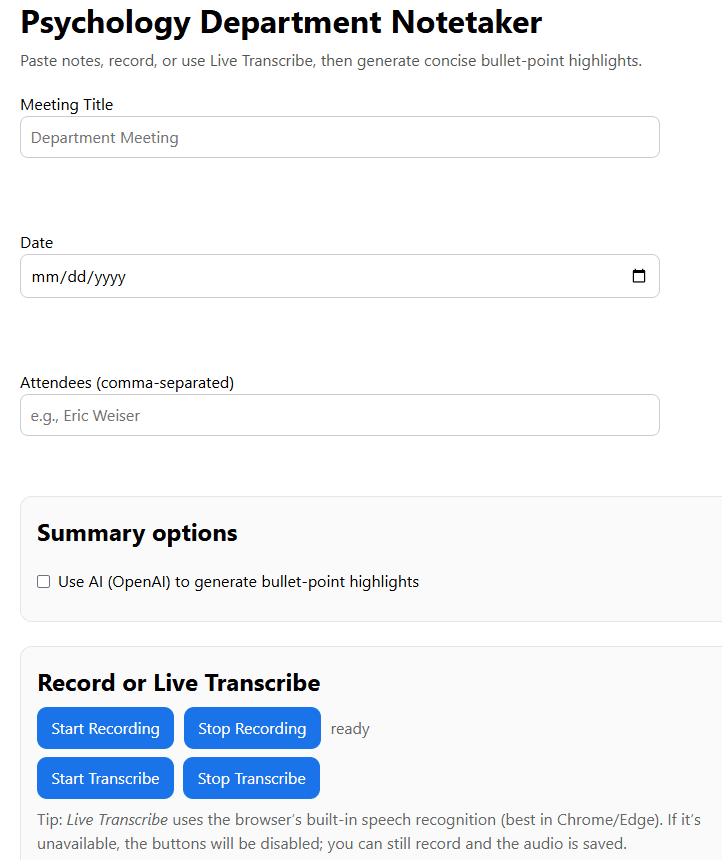
Psychology Department Notetaker
Psychology Department Notetaker
A prototype AI notetaker that captures live transcripts and generates concise, structured summaries for academic department meetings and other professional meetings. Built as a demonstration of applied AI workflows; not publicly available.
A prototype AI notetaker that captures live transcripts and generates concise, structured summaries for academic department meetings and other professional meetings. Built as a demonstration of applied AI workflows; not publicly available.
Hobby Market: AI-Generated Marketplace Prototype
Hobby Market: AI-Generated Marketplace Prototype
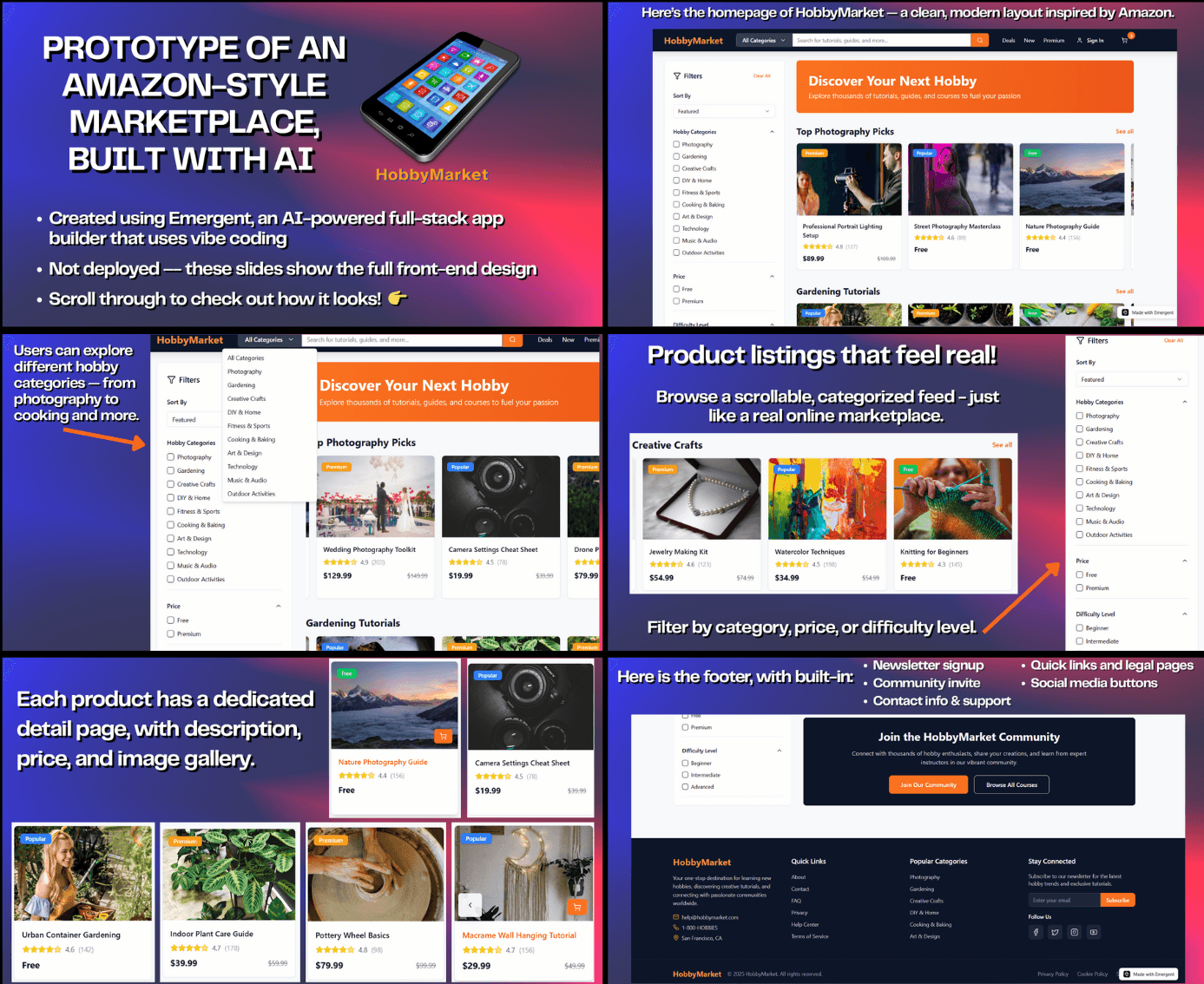
Here, I built an Amazon-style marketplace prototype called "HobbyMarket" using Emergent, an AI-powered full-stack app builder. HobbyMarket demonstrates how AI can generate modern marketplace layouts, category browsing, and structured product sections entirely from prompts. The project focuses on front-end design and user experience rather than production deployment, at least for now. This is a conceptual prototype and is not a live or publicly available app.
Here, I built an Amazon-style marketplace prototype called "HobbyMarket" using Emergent, an AI-powered full-stack app builder. HobbyMarket demonstrates how AI can generate modern marketplace layouts, category browsing, and structured product sections entirely from prompts. The project focuses on front-end design and user experience rather than production deployment, at least for now. This is a conceptual prototype and is not a live or publicly available app.
Danica: RAG-Powered Syllabus Assistant
Danica: RAG-Powered Syllabus Assistant
Meet Danica, my Virtual Assistant! Danica is a Retrieval Augmented Generation (RAG) assistant built with Python, Streamlit, FAISS, and HuggingFace embeddings to answer syllabus questions for my Abnormal Psychology course. Danica retrieved course specific content and generated accurate, context aware responses, streamlining student inquiries while demonstrating practical academic AI deployment. The project is currently archived but served as a full working prototype of a course specific RAG system.
Meet Danica, my Virtual Assistant! Danica is a Retrieval Augmented Generation (RAG) assistant built with Python, Streamlit, FAISS, and HuggingFace embeddings to answer syllabus questions for my Abnormal Psychology course. Danica retrieved course specific content and generated accurate, context aware responses, streamlining student inquiries while demonstrating practical academic AI deployment. The project is currently archived but served as a full working prototype of a course specific RAG system.

Machine Learning & Data Analysis
Machine Learning & Data Analysis
Predicting NFL Scores with Machine Learning
Predicting NFL Scores with Machine Learning
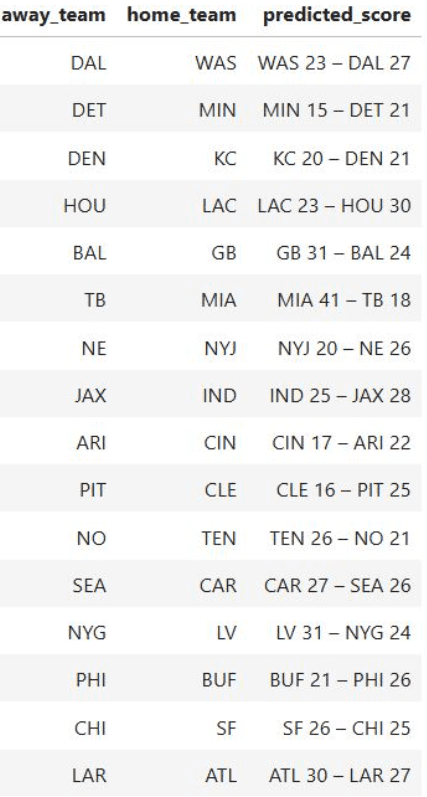
A machine-learning project using a gradient boosted-regression model to predict NFL game scores, trained on team-level performance features. Results were shared publicly as weekly predictions to demonstrate applied sports analytics and model interpretability. Below are the predicted scores for all NFL games in Week 17 of the 2025 NFL season.
A machine-learning project using a gradient boosted-regression model to predict NFL game scores, trained on team-level performance features. Results were shared publicly as weekly predictions to demonstrate applied sports analytics and model interpretability. Below are the predicted scores for all NFL games in Week 17 of the 2025 NFL season.
Agentic AI for Insurance Cost Prediction
Agentic AI for Insurance Cost Prediction
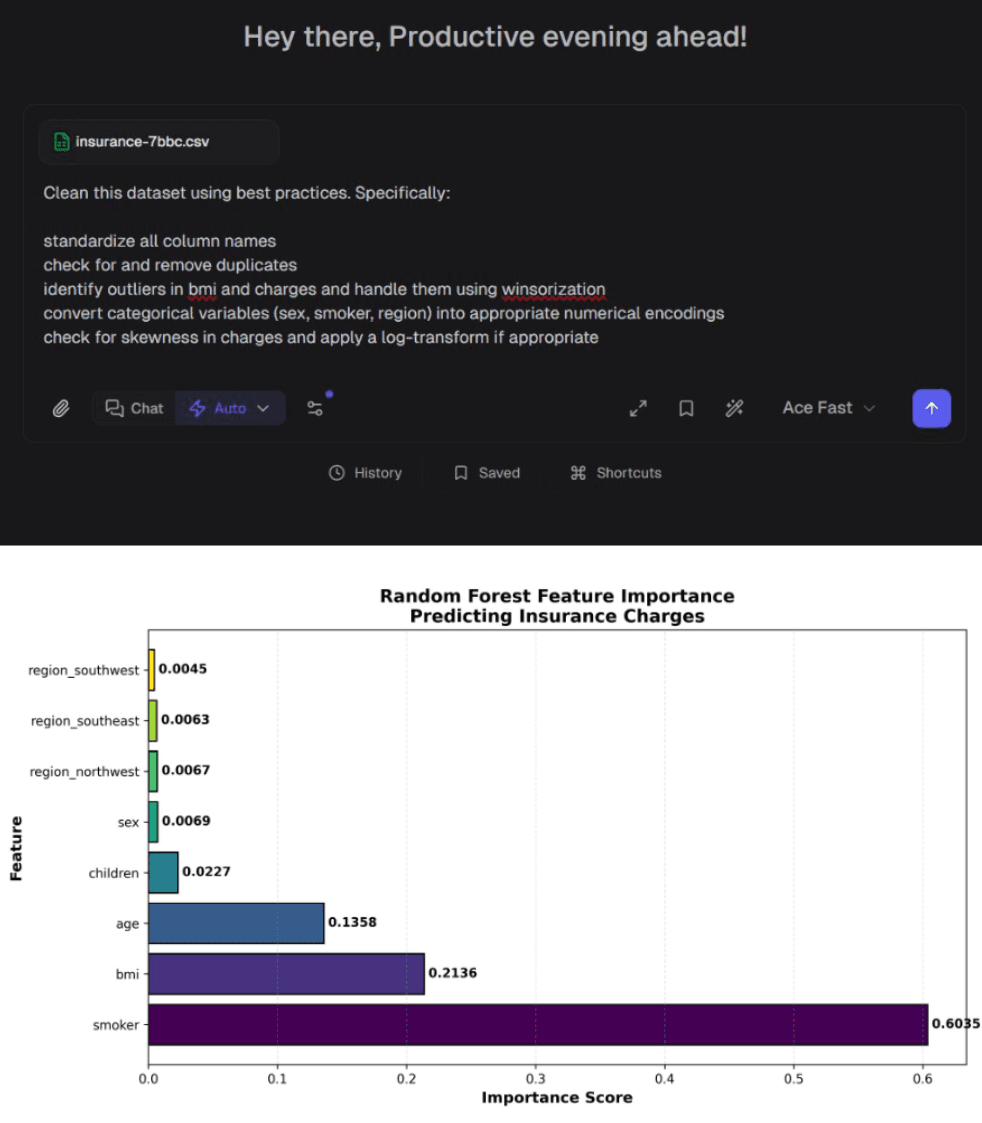
I used Raccoon AI to run a complete machine learning workflow on a public medical insurance cost dataset, including data cleaning, encoding, model training, and feature interpretation, all from a single detailed prompt.
I used Raccoon AI to run a complete machine learning workflow on a public medical insurance cost dataset, including data cleaning, encoding, model training, and feature interpretation, all from a single detailed prompt.
Monte Carlo Portfolio Simulation with and without Crypto
Monte Carlo Portfolio Simulation with and without Crypto
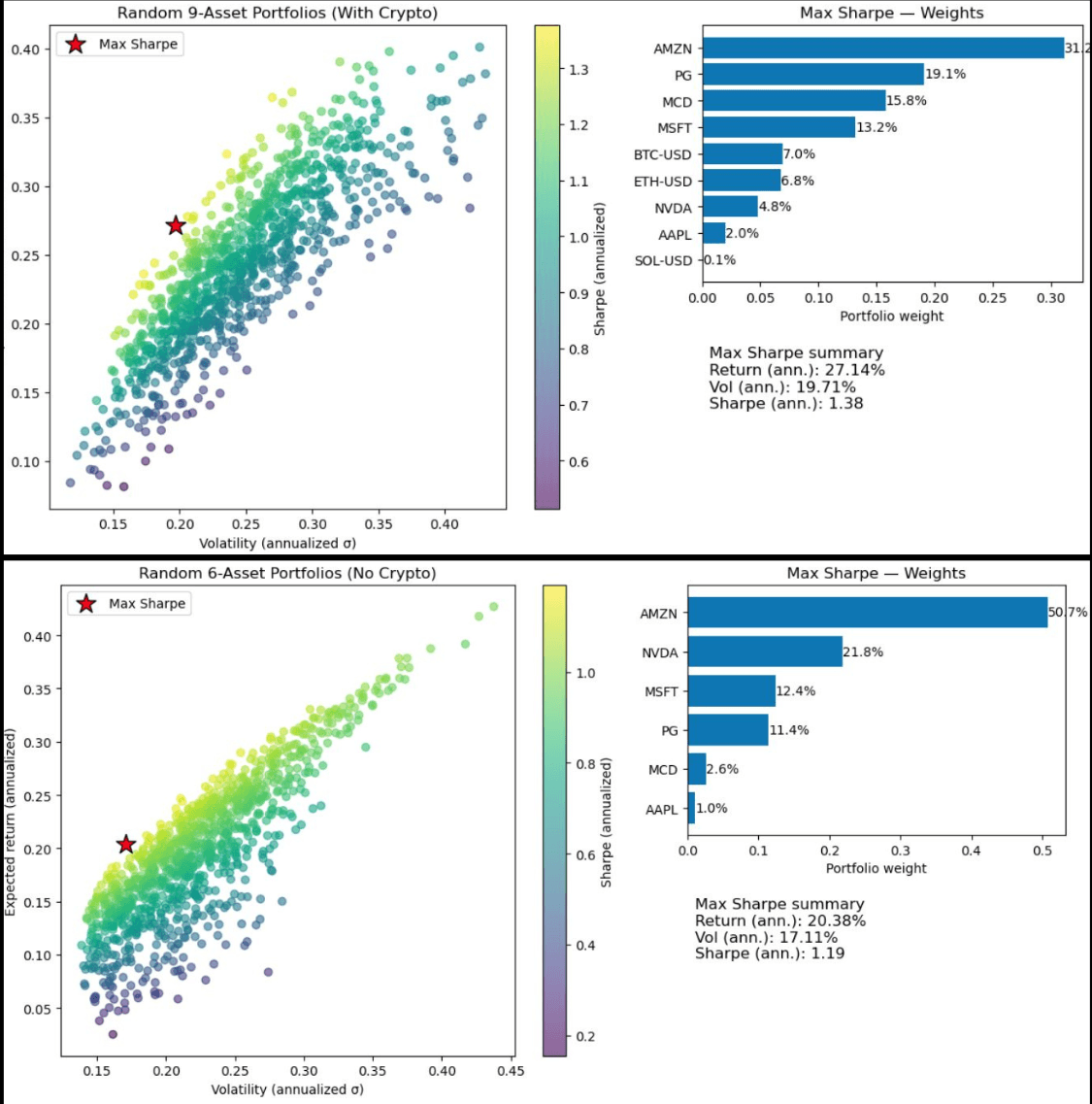
I used Python to run a Monte Carlo simulation of 1,000 randomly weighted portfolios to compare risk, volatility, and risk-adjusted returns with and without a crypto allocation. The project analyzes how adding crypto affects portfolio performance and illustrates tradeoffs using real market data, Sharpe ratios, and visualization.
I used Python to run a Monte Carlo simulation of 1,000 randomly weighted portfolios to compare risk, volatility, and risk-adjusted returns with and without a crypto allocation. The project analyzes how adding crypto affects portfolio performance and illustrates tradeoffs using real market data, Sharpe ratios, and visualization.
Predicting COVID Mortality with Machine Learning
Predicting COVID Mortality with Machine Learning
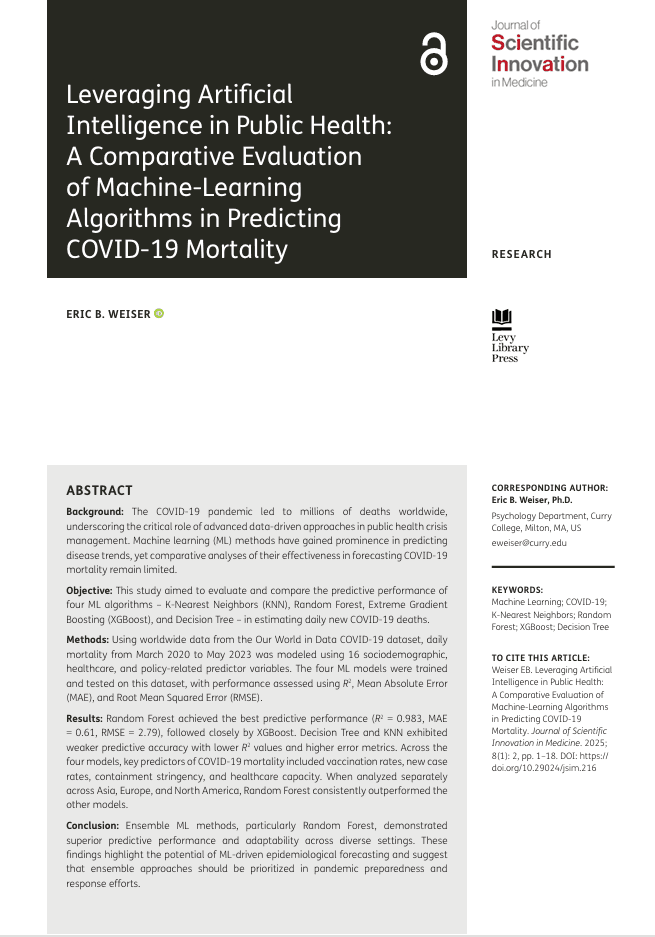
This is an empirical, peer-reviewed journal article I authored examining the performance of multiple machine learning algorithms in predicting COVID-19 mortality using large-scale global health data. The paper demonstrates applied predictive modeling under real-world public health conditions.
This is an empirical, peer-reviewed journal article I authored examining the performance of multiple machine learning algorithms in predicting COVID-19 mortality using large-scale global health data. The paper demonstrates applied predictive modeling under real-world public health conditions.
Stress Prediction with Machine Learning and SHAP
Stress Prediction with Machine Learning and SHAP
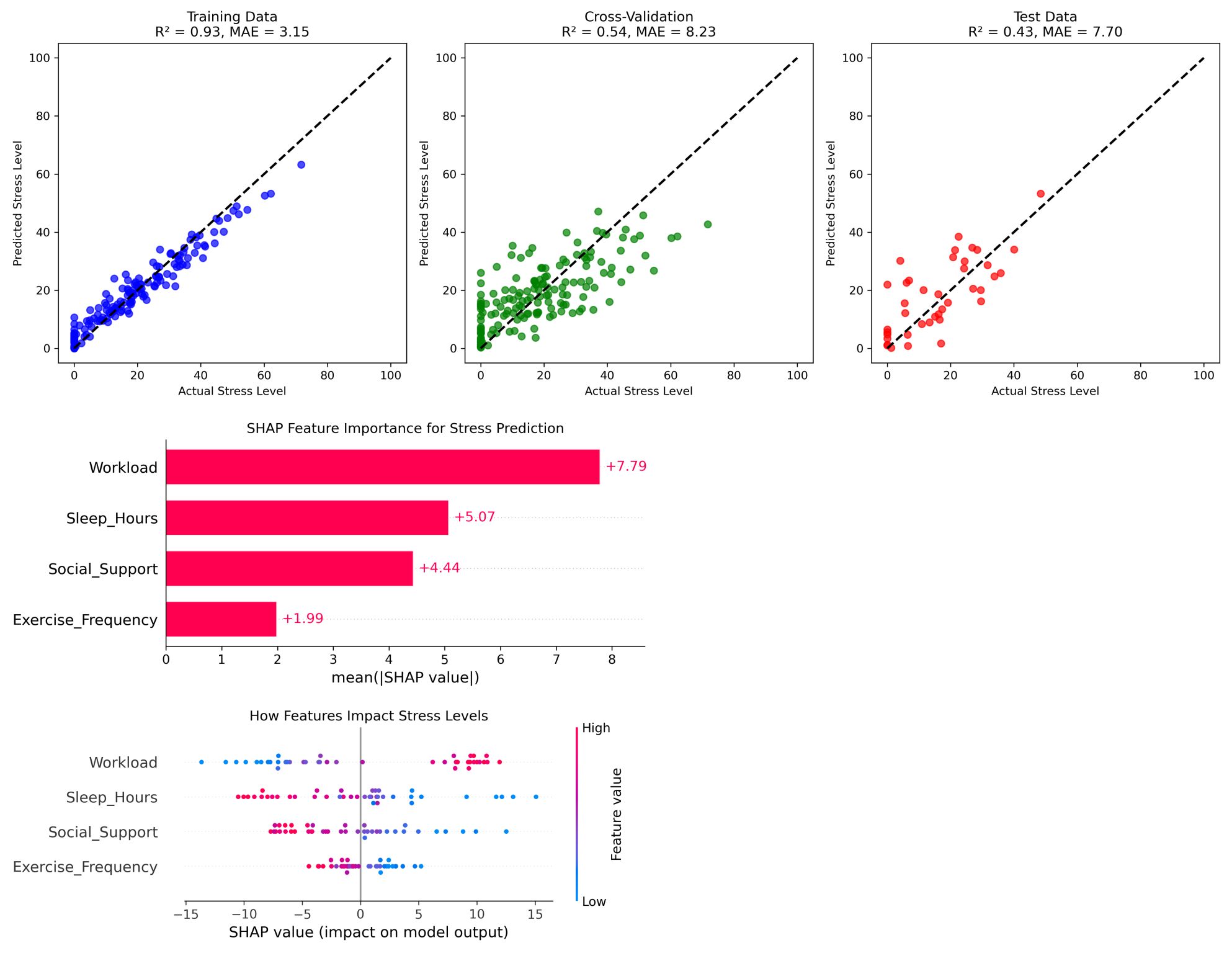
This project demonstrates how machine learning models can be made interpretable using SHAP (SHapley Additive exPlanations), a game theory based method that explains individual predictions by estimating how much each feature contributes to the final
output. Using synthetic data, I built a Random Forest regression model to predict stress levels based on sleep, social support, workload, and exercise frequency. The model achieved strong training performance and solid cross validation results.
SHAP analysis revealed that workload had the largest impact on stress predictions, followed by exercise and sleep, while higher social support reduced predicted stress. The visualizations shown here, including SHAP summary plots and beeswarm plots,
illustrate how feature effects vary across individuals.This project highlights how explainable AI transforms black box predictions into transparent, actionable insights for psychology, healthcare, and applied data science.
This project demonstrates how machine learning models can be made interpretable using SHAP (SHapley Additive exPlanations), a game theory based method that explains individual predictions by estimating how much each feature contributes to the final
output. Using synthetic data, I built a Random Forest regression model to predict stress levels based on sleep, social support, workload, and exercise frequency. The model achieved strong training performance and solid cross validation results.
SHAP analysis revealed that workload had the largest impact on stress predictions, followed by exercise and sleep, while higher social support reduced predicted stress. The visualizations shown here, including SHAP summary plots and beeswarm plots,
illustrate how feature effects vary across individuals.This project highlights how explainable AI transforms black box predictions into transparent, actionable insights for psychology, healthcare, and applied data science.
This project demonstrates how machine learning models can be made interpretable using SHAP (SHapley Additive exPlanations), a game theory based method that explains individual predictions by estimating how much each feature contributes to the final output. Using synthetic data, I built a Random Forest regression model to predict stress levels based on sleep, social support, workload, and exercise frequency. The model achieved strong training performance and solid cross validation results.
SHAP analysis revealed that workload had the largest impact on stress predictions, followed by exercise and sleep, while higher social support reduced predicted stress. The visualizations shown here, including SHAP summary plots and beeswarm plots, illustrate how feature effects vary across individuals. This project highlights how explainable AI transforms black box predictions into transparent, actionable insights for psychology, healthcare, and applied data science.
Psychology Demos
Psychology Demos
AI-Assisted Meta-Analysis with Gemini
AI-Assisted Meta-Analysis with Gemini
This demo (carousel) shows how modern AI tools can accelerate parts of the research synthesis workflow. Using Google’s Gemini model, I uploaded 11 published psychology papers examining the "ovulatory shift hypothesis," an idea from evolutionary psychology suggesting that women’s mating strategies and mate preferences shift across the menstrual cycle, with stronger attraction to masculine traits and behaviors near ovulation. Gemini extracted key statistics from the studies, which were then organized into a structured dataset and converted to a common effect size.
Using this dataset, a fixed-effect meta-analysis was performed across the studies (N = 1,633), producing a pooled correlation of r = .40 (95% CI [.359, .441]), meaning fertility status accounted for roughly 16% of the variation in mate preferences across the studies. In practical terms, the results suggest that during periods of high fertility, women tend to show stronger preferences for males with more masculine male traits. The goal of this demonstration is not to replace the careful work required for a full systematic review, but to illustrate how AI can dramatically speed up the early stages of evidence synthesis.
Click the image below to view the full slide deck (PDF).
This demo (carousel) shows how modern AI tools can accelerate parts of the research synthesis workflow. Using Google’s Gemini model, I uploaded 11 published psychology papers examining the "ovulatory shift hypothesis," an idea from evolutionary psychology suggesting that women’s mating strategies and mate preferences shift across the menstrual cycle, with stronger attraction to masculine traits and behaviors near ovulation. Gemini extracted key statistics from the studies, which were then organized into a structured dataset and converted to a common effect size.
Using this dataset, a fixed-effect meta-analysis was performed across the studies (N = 1,633), producing a pooled correlation of r = .40 (95% CI [.359, .441]), meaning fertility status accounted for roughly 16% of the variation in mate preferences across the studies. In practical terms, the results suggest that during periods of high fertility, women tend to show stronger preferences for males with more masculine male traits. The goal of this demonstration is not to replace the careful work required for a full systematic review, but to illustrate how AI can dramatically speed up the early stages of evidence synthesis.
Click the image below to view the full slide deck (PDF).
Noctura: Claude-Built AI-Powered Psychological Reflection Experience
Noctura: Claude-Built AI-Powered Psychological Reflection Experience
An experimental AI psychology web experience built with Claude, React, and Vite. Noctura explores personality, attachment patterns, and relationship dynamics through cinematic storytelling, interactive archetypes, and AI-generated psychological readings. Designed as a premium concept demo blending behavioral psychology, UX design, and generative AI.
An experimental AI psychology web experience built with Claude, React, and Vite. Noctura explores personality, attachment patterns, and relationship dynamics through cinematic storytelling, interactive archetypes, and AI-generated psychological readings. Designed as a premium concept demo blending behavioral psychology, UX design, and generative AI.
Testing Classic Psycholgy Theories with Modern NBA Data
Testing Classic Psycholgy Theories with Modern NBA Data
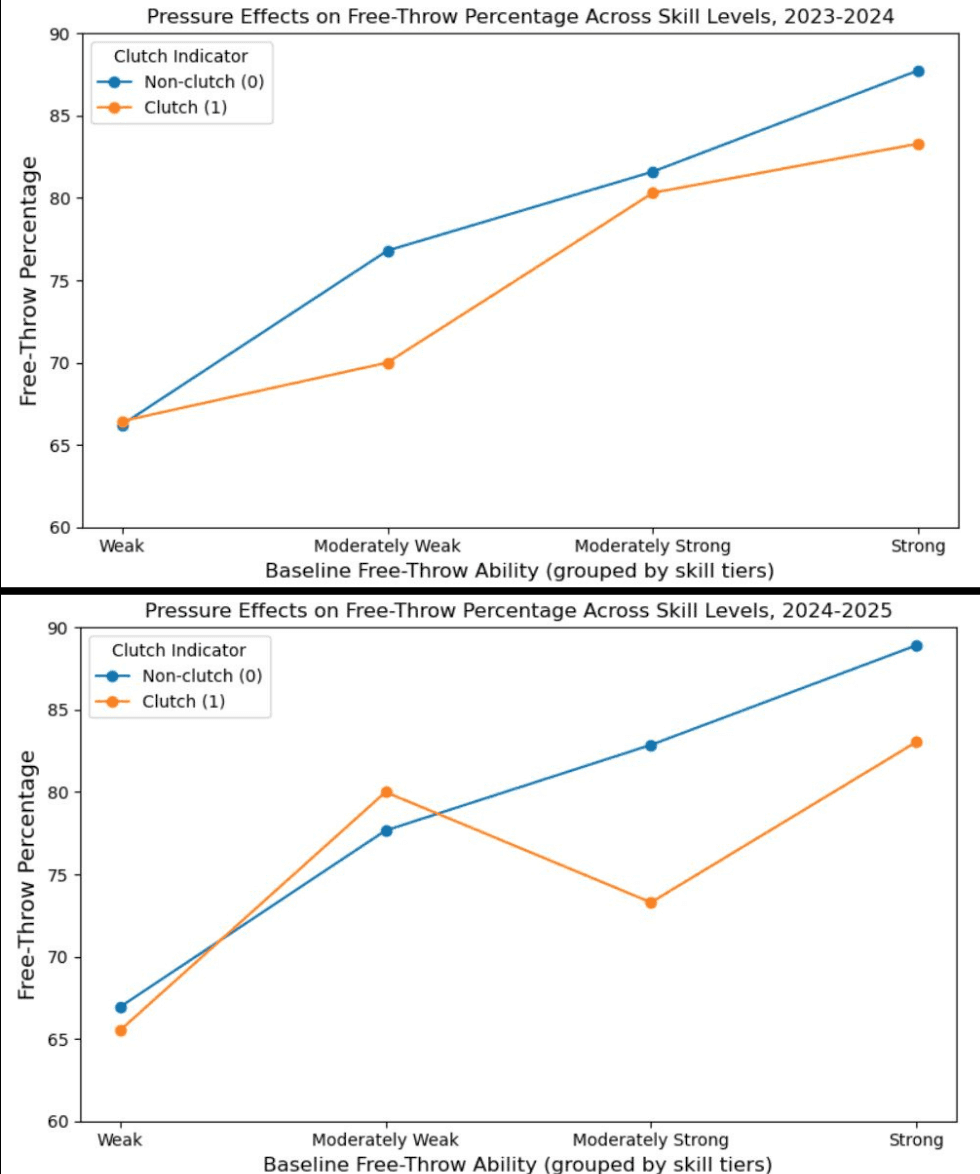
In this project, I tested classic psychological theories of performance under pressure, including Hull–Spence drive theory and social facilitation, using modern NBA free-throw data. Using Python and machine learning classification models, I analyzed how shooting skill and high-pressure situations interact to influence performance across two seasons (2023-2024 and 2024-2025). The results suggest that while stronger shooters perform better overall, they may be more vulnerable to performance drops in extreme pressure situations, offering a nuanced view of choking under pressure. This project demonstrates how modern data science tools can be used to revisit and critically evaluate foundational psychological theories in real-world settings.
In this project, I tested classic psychological theories of performance under pressure, including Hull–Spence drive theory and social facilitation, using modern NBA free-throw data. Using Python and machine learning classification models, I analyzed how shooting skill and high-pressure situations interact to influence performance across two seasons (2023-2024 and 2024-2025). The results suggest that while stronger shooters perform better overall, they may be more vulnerable to performance drops in extreme pressure situations, offering a nuanced view of choking under pressure. This project demonstrates how modern data science tools can be used to revisit and critically evaluate foundational psychological theories in real-world settings.
Modeling Mental Health as Symptom Networks
Modeling Mental Health as Symptom Networks
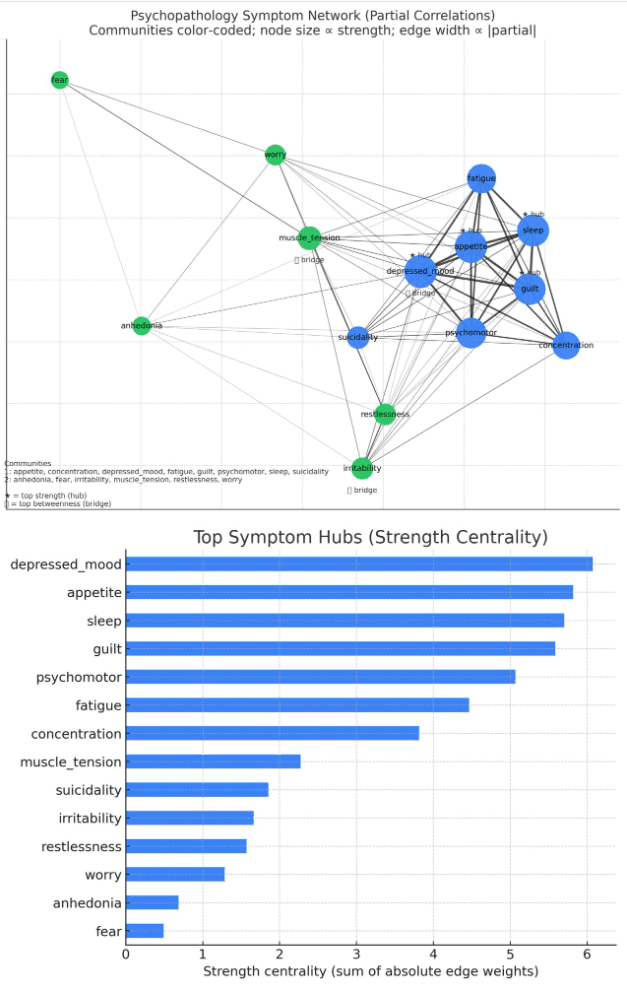
In his project, I used GPT-5 to help analyze mental health data in a different way by treating depression and anxiety as networks of interacting symptoms rather than as single underlying conditions. The analysis is based on symptom data drawn from published clinical research and examines how individual symptoms relate to one another when all other symptoms are taken into account. The results highlight which symptoms tend to be most influential, which ones link depression and anxiety together, and how groups of symptoms naturally cluster. This approach shifts the focus away from diagnoses and toward understanding how specific symptoms may reinforce each other, offering a more intuitive way to think about mental health and how targeted interventions might reduce distress. The project shows how AI tools can make complex analytical methods easier to explore and explain.
In his project, I used GPT-5 to help analyze mental health data in a different way by treating depression and anxiety as networks of interacting symptoms rather than as single underlying conditions. The analysis is based on symptom data drawn from published clinical research and examines how individual symptoms relate to one another when all other symptoms are taken into account. The results highlight which symptoms tend to be most influential, which ones link depression and anxiety together, and how groups of symptoms naturally cluster. This approach shifts the focus away from diagnoses and toward understanding how specific symptoms may reinforce each other, offering a more intuitive way to think about mental health and how targeted interventions might reduce distress. The project shows how AI tools can make complex analytical methods easier to explore and explain.
Quantum Cognitive Modeling of Jury Decision Making
Quantum Cognitive Modeling of Jury Decision Making
This project uses a quantum-inspired cognitive model to simulate how the order of courtroom evidence influences jury verdicts. Built in Python using Matplotlib visualizations and unitary rotation matrices from quantum theory, the model
demonstrates order effects in belief updating. Each chart starts with a neutral 50/50 split (initial belief) and ends with a probabilistic verdict, not based on legal rulings, but on modeled cognitive responses to the sequence of evidence. Simulated jurors update their probability of verdicts depending on whether DNA evidence or eyewitness testimony is presented first. The results illustrate how sequence, not just content, shapes decision outcomes. This work bridges social psychology, cognitive modeling, and computational simulation to explore how presentation order alters attitude formation and shift.
This project uses a quantum-inspired cognitive model to simulate how the order of courtroom evidence influences jury verdicts. Built in Python using Matplotlib visualizations and unitary rotation matrices from quantum theory, the model demonstrates order effects in belief updating.
Each chart starts with a neutral 50/50 split (initial belief) and ends with a probabilistic verdict, not based on legal rulings, but on modeled cognitive responses to the sequence of evidence. Simulated jurors update their probability of verdicts depending on whether DNA evidence or eyewitness testimony is presented first. The results illustrate how sequence, not just content, shapes jury verdicts. This work bridges social psychology, cognitive modeling, and computational simulation to explore how presentation order alters attitude formation and shift.
This project uses a quantum-inspired cognitive model to simulate how the order of courtroom evidence influences jury verdicts. Built in Python using Matplotlib visualizations and unitary rotation matrices from quantum theory, the model demonstrates order effects in belief updating. Each chart starts with a neutral 50/50 split (initial belief) and ends with a probabilistic verdict, not based on legal rulings, but on modeled cognitive responses to the sequence of evidence. Simulated jurors update their probability of verdicts depending on whether DNA evidence or eyewitness testimony is presented first. The results illustrate how sequence, not just content, shapes decision outcomes. This work bridges social psychology, cognitive modeling, and computational simulation to explore how presentation order alters attitude formation and shift.
AI Videos and Media
AI Videos and Media
Kylian Mbappé FIFA World Cup 2026 Poster
Kylian Mbappé FIFA World Cup 2026 Poster
A promotional poster concept for the 2026 FIFA World Cup featuring French captain Kylian Mbappé. The design was created entirely through AI-powered prompt engineering, with detailed direction for typography, composition, lighting, contrast, color palette, and visual hierarchy.
A promotional poster concept for the 2026 FIFA World Cup featuring French captain Kylian Mbappé. The design was created entirely through AI-powered prompt engineering, with detailed direction for typography, composition, lighting, contrast, color palette, and visual hierarchy.

Yankees vs. Dodgers World Series Game 7 Simulation (Claude Fable 5)
Yankees vs. Dodgers World Series Game 7 Simulation (Claude Fable 5)
A highlight-reel video from an AI-generated simulation of a hypothetical 2026 World Series Game 7 between the New York Yankees and Los Angeles Dodgers (at Dodger Stadium). Created during the brief public release of Claude Fable 5, the project demonstrates how AI can generate an interactive sports simulation from a single detailed prompt.
The video shows scoring highlights from a full 9-inning game: a 2-run homer by Cody Bellinger (Yankees, 3rd inning), a 2-run blast by Paul Goldschmidt (Yankees, 8th inning), and a solo shot by Dodgers superstar Shohei Ohtani (5th inning). Every simulation plays out differently. In this one, Yanks' pitching shut down the terrific Dodger offense.
A highlight-reel video from an AI-generated simulation of a hypothetical 2026 World Series Game 7 between the New York Yankees and Los Angeles Dodgers (at Dodger Stadium). Created during the brief public release of Claude Fable 5, the project demonstrates how AI can generate an interactive sports simulation from a single detailed prompt.
The video shows scoring highlights from a full 9-inning game: a 2-run homer by Cody Bellinger (Yankees, 3rd inning), a 2-run blast by Paul Goldschmidt (Yankees, 8th inning), and a solo shot by Dodgers superstar Shohei Ohtani (5th inning). Every simulation plays out differently. In this one, Yanks' pitching shut down the terrific Dodger offense.
Medeo AI Video Prototype
Medeo AI Video Prototype
A 22-second cinematic video created from a chat prompt using Medeo AI, then edited into a finished short with simple text overlays. Built as a demo of prompt-to-video concept generation.
A 22-second cinematic video created from a chat prompt using Medeo AI, then edited into a finished short with simple text overlays. Built as a demo of prompt-to-video concept generation.
The Groove Detectives: An AI-Generated
1970s Cop Show Concept
The Groove Detectives: An AI-Generated 1970s Cop Show Concept
I created this 1970s-style cop show spoof using Google Veo 3 and a multi-tool AI production workflow. Directed through prompt engineering and refined with Canva editing, Udio soundtrack generation, and ElevenLabs voiceover, this project demonstrates cinematic AI storytelling and rapid creative prototyping without traditional production resources.
I created this 1970s-style cop show spoof using Google Veo 3 and a multi-tool AI production workflow. Directed through prompt engineering and refined with Canva editing, Udio soundtrack generation, and ElevenLabs voiceover, this project demonstrates cinematic AI storytelling and rapid creative prototyping without traditional production resources.
Ageless Steel YouTube Channel Trailer
Ageless Steel YouTube Channel Trailer
A launch trailer for Ageless Steel, a YouTube channel I am developing centered on fitness, longevity, and modern style for men over 40. Created using licensed cinematic footage (Envato Elements) and edited in Canva, the project integrates AI-assisted production, brand positioning, and motivational storytelling to establish a focused fitness and fashion identity.
A launch trailer for Ageless Steel, a YouTube channel I am developing centered on fitness, longevity, and modern style for men over 40. Created using licensed cinematic footage (Envato Elements) and edited in Canva, the project integrates AI-assisted production, brand positioning, and motivational storytelling to establish a focused fitness and fashion identity.
Building a Mini AI App with Claude Artifacts
Building a Mini AI App with Claude Artifacts
A short video I created demonstrating how Claude's AI Artifacts features can be used to build, customize, and deploy an AI-powered mini app.
A short video I created demonstrating how Claude's AI Artifacts features can be used to build, customize, and deploy an AI-powered mini app.
AI-Generated Amazon Brand Commercial
AI-Generated Amazon Brand Commercial
An AI-generated brand commercial concept for Amazon, created using generative video tools and refined through post-production editing. This project demonstrates AI-assisted creative direction, cinematic storytelling, and rapid brand-level campaign prototyping.
An AI-generated brand commercial concept for Amazon, created using generative video tools and refined through post-production editing. This project demonstrates AI-assisted creative direction, cinematic storytelling, and rapid brand-level campaign prototyping.
AI-Generated Amazon Brand Spot (Concept II)
AI-Generated Amazon Brand Spot (Concept II)
AI-Generated Amazon Brand Spot (Concept II)
A second AI-generated Amazon brand commercial concept created using Veo. This iteration explores alternative visual direction, pacing, and brand tone while demonstrating the ability to rapidly prototype multiple campaign concepts using generative video tools.
A second AI-generated Amazon brand commercial concept created using Veo. This iteration explores alternative visual direction, pacing, and brand tone while demonstrating the ability to rapidly prototype multiple campaign concepts using generative video tools.
Insight Analytics Promotional Video
Insight Analytics Promotional Video
A short promotional video created to launch and market Insight Analytics, my independent data analysis service. This project combines AI-assisted video production, strategic messaging, and brand positioning to communicate the value of turning complex business data into clear, actionable insights for small businesses and entrepreneurs.
A short promotional video created to launch and market Insight Analytics, my independent data analysis service. This project combines AI-assisted video production, strategic messaging, and brand positioning to communicate the value of turning complex business data into clear, actionable insights for small businesses and entrepreneurs.
AI-Generated Bartender Video (Veo 3 + Canva)
AI-Generated Bartender Video (Veo 3 + Canva)
Short AI-generated video created using OpenAI’s Veo 3 inside Canva, with layered editing and music. An early experiment exploring AI-assisted video production workflows and rapid creative prototyping.
Short AI-generated video created using OpenAI’s Veo 3 inside Canva, with layered editing and music. An early experiment exploring AI-assisted video production workflows and rapid creative prototyping.
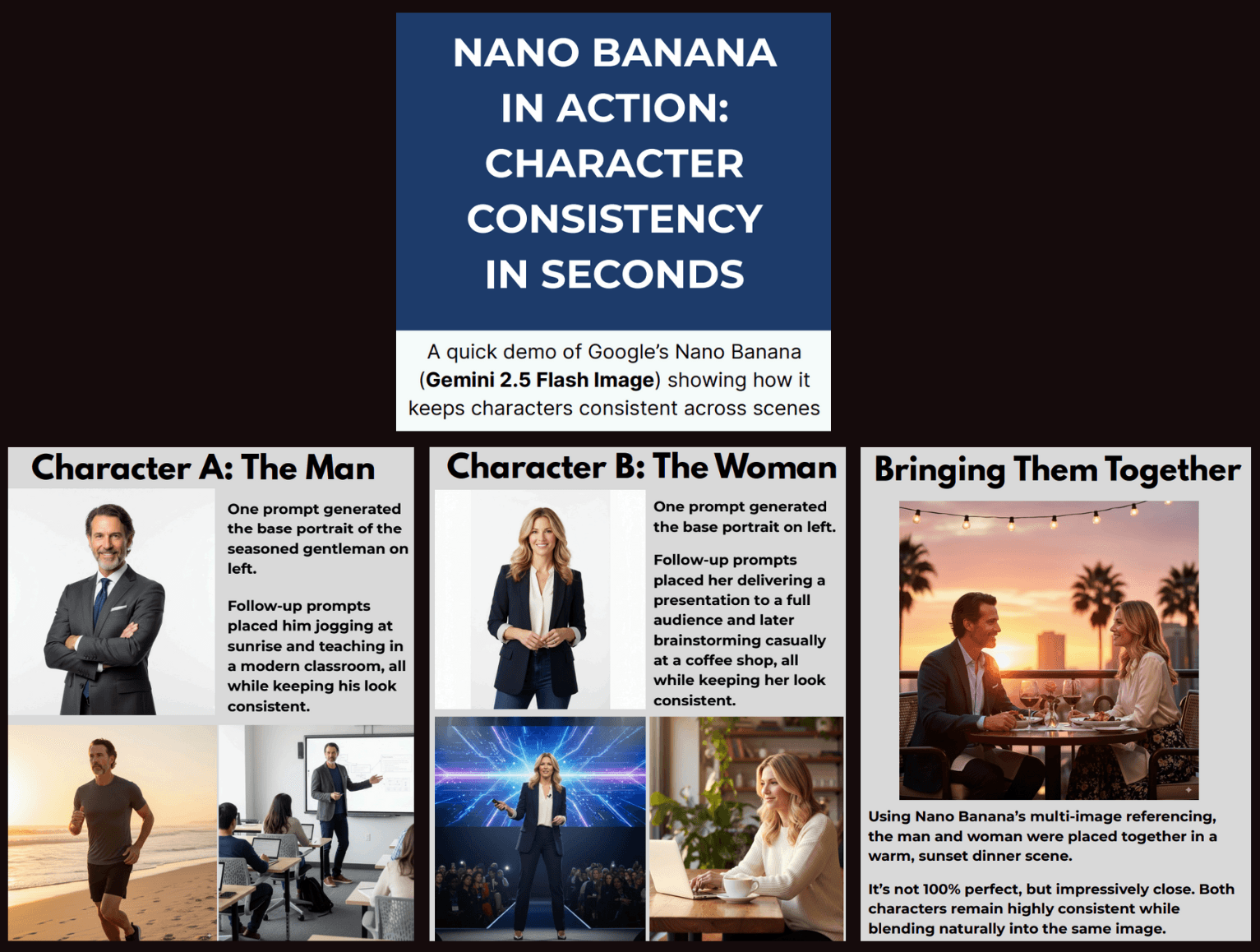
Character Consistency in Nano Banana
Character Consistency in Nano Banana
I used Nano Banana, powered by Google’s Gemini 2.5 Flash Image model, to test character consistency across multiple scenes and prompts. The project explores how well the system preserves identity and visual coherence, including a multi-image experiment that combines two independently generated characters into a single scene.
I used Nano Banana, powered by Google’s Gemini 2.5 Flash Image model, to test character consistency across multiple scenes and prompts. The project explores how well the system preserves identity and visual coherence, including a multi-image experiment that combines two independently generated characters into a single scene.